
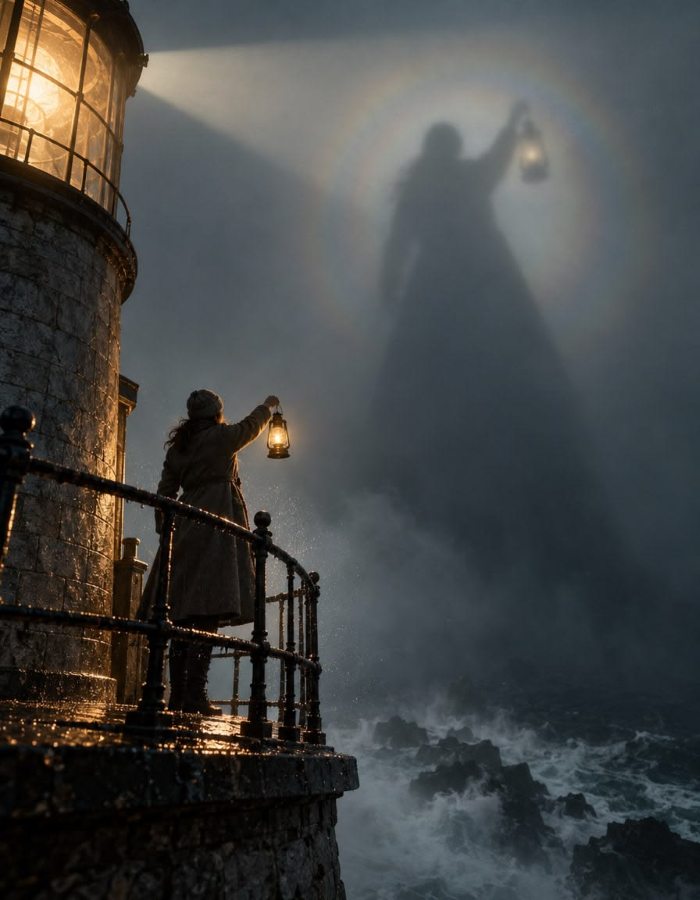
Una nueva  «creepypasta» llega a esta sección. Creemos que todos sabéis que es, pero os lo recordamos. Se trata de una historia corta de terror que se publica en internet y que está diseñada para no dejar indiferente a los lectores. Esta creepypasta lo hemos encontrado en inglés, por lo que lo hemos traducido para una mejor comprensión. Se llama “The lighthouse in Munish”. Esperamos que os guste.
– The lighthouse in Munish –
At the southern cape of my town, Munish, there still stands a hundred-year-old lighthouse that was built by the white men who came to this place two centuries ago. They stayed long and worked tirelessly to convert our culture to their ways, but ultimately failed even through violence the frigid temperatures, we knew, could not be tolerated by the inexperienced white men.
As a sort of last hurrah, they constructed a glaringly ugly lighthouse for the reason that unsuspecting sailors might wreck their ships here if there were no guidepost. But we all knew that the real reason was that, when they had their reinforcements, they could easily locate Munish again.
My ancestors took it upon themselves to destroy the beacon for that reason – and they did. For a time, life for them was good. The white men never returned, the lighthouse was vacant, and Munish remained happily secluded.
However, this changed on the day that the lighthouse beacon, despite being wrecked, inexplicably flickered back to life and lit a clear path over the sea for the white men to follow. Munish panicked, and a small heroic group traveled to the southern cape and entered the lighthouse with the singular goal of eliminating the problem. In the town, every individual witnessed the light die again. It was a startling moment, for the joy and relief that should have been felt was eerily misplaced. An appalling silence drowned everything.
The men who carried out the heroic act of destroying the light never returned. In their honor, an annual festival was founded on the day of their deaths. The very next year, on the day before the festival, the light returned. Again the town fell into fearful madness, and a handful of brave warriors followed the path of the fallen men from the prior year. For a third time, the lighthouse dimmed; the men did not return to celebrate.
Rumors were propagated after that, many suggesting that an evil spirit had possessed the lighthouse, and that it had taken the heroes for destroying its beacon. The rumors became ingrained into the culture, and soon tales of the Ning (the abominable creature said to dwell within the lighthouse) were commonplace in Munish. They were so well-known, in fact, that when on the following year the light came again, none offered themselves to douse it, out of fear of the Ning. Days passed, and the light shone on. No white men arrived, but the light continually grew stronger and took on a greenish hue.
In the span of a week, several individuals had alarmingly ended their own lives by way of lying nude in the tundra away from town for house – a terribly slow, grisly way to die. Inaction was the primary policy until several more villagers went berserk and threw themselves from the icy cliffs – the ones located beside the lighthouse. After much argument and many difficult decisions, the village sent multiple unwilling men to do the deed. Minutes later, the horrific greenness died, the men nowhere to be found.
For a century this trend continued, with each year growing increasingly tense for the townspeople. No longer were there volunteers, but instead the village chief selected the unfortunate sacrifices. All the while, the mystery of the lighthouse (and the supposed Ning) was never resolved. The light returned two days ago, in fact.
As it happens, I am the next in line to die.
– Un faro en Munish –
En el extremo sur de mi pueblo, Munish, aún se alza un faro centenario, construido por los hombres blancos que llegaron a este lugar hace dos siglos. Permanecieron aquí mucho tiempo y trabajaron incansablemente para transformar nuestra cultura según sus costumbres, pero fracasaron, incluso recurriendo a la violencia; sabíamos que aquellos hombres blancos, carentes de experiencia, no podrían soportar las temperaturas gélidas.
Como una especie de último gesto, erigieron un faro de una fealdad pasmosa, bajo el pretexto de que, sin una señal, los marineros desprevenidos podrían naufragar en estas costas. Pero todos sabíamos que la verdadera razón era otra: cuando llegaran sus refuerzos, podrían localizar Munish con facilidad.
Por este motivo, mis antepasados decidieron destruir el faro, y así lo hicieron. Durante un tiempo, vivieron bien. Los hombres blancos nunca regresaron, el faro quedó abandonado y Munish permaneció felizmente aislado.
Sin embargo, todo cambió el día en que la luz del faro –a pesar de estar en ruinas– volvió a encenderse inexplicablemente, trazando un camino claro sobre el mar para que los hombres blancos pudieran seguirlo. Cundió el pánico en Munish, y un pequeño grupo de héroes se dirigió al extremo sur, adentrándose en el faro con el único objetivo de acabar con el problema. Todos los habitantes del pueblo fueron testigos de cómo la luz se apagaba de nuevo. Fue un momento sobrecogedor, pues la alegría y el alivio que cabría esperar brillaron por su ausencia de una manera inquietante. Un silencio aterrador lo inundó todo.
Los hombres que llevaron a cabo la heroica tarea de destruir la luz nunca regresaron. En su honor, se instauró un festival anual que se celebra el día de su muerte. Al año siguiente, justo la víspera del festival, la luz volvió a aparecer. El pueblo se sumió de nuevo en una locura llena de temor, y un puñado de valientes guerreros siguió los pasos de quienes habían perecido el año anterior. Por tercera vez, la luz del faro se extinguió; los hombres no regresaron para la celebración. Tras aquello, comenzaron a propagarse rumores; muchos sugerían que un espíritu maligno había poseído el faro y que se había cobrado la vida de los héroes por haber destruido su luz. Los rumores se arraigaron en la cultura y, pronto, las historias sobre el «Ning» –la abominable criatura que, según se decía, habitaba en el faro– se volvieron moneda corriente en Munish. Eran tan conocidas que, al año siguiente, cuando la luz volvió a aparecer, nadie se ofreció a apagarla, por miedo al Ning. Pasaron los días y la luz siguió brillando. No llegaron hombres blancos, pero la luz se intensificó gradualmente y adquirió un tono verdoso.
En el transcurso de una semana, varias personas acabaron con sus propias vidas de una forma alarmante: se tumbaron desnudas en la tundra, lejos del pueblo; una muerte terriblemente lenta y macabra. La inacción fue la norma hasta que otros aldeanos perdieron la razón y se arrojaron desde los acantilados helados, situados junto al faro. Tras largas discusiones y decisiones difíciles, la aldea envió a varios hombres, que fueron obligados a cumplir con el cometido. Minutos después, el horrendo resplandor verde se extinguió, y de los hombres no quedó ni rastro.
Esta dinámica continuó durante un siglo, volviéndose cada año más tensa para los habitantes del pueblo. Ya no había voluntarios; en su lugar, el jefe de la aldea elegía a los desafortunados que debían ser sacrificados. Entretanto, el misterio del faro –y del supuesto Ning– jamás se resolvió. De hecho, la luz ha vuelto a aparecer hace dos días.
Y resulta que, ahora, me toca a mí morir.

La imagen de cabecera pertenece a ©Lukman Febrianto. Se titula «The Shadow Keeps Watch». La hemos seleccionado para ilustrar este creepypasta, puesto que el autor no ha incluido ninguna.